.png)

.avif)
Overview
Designing for the future is no longer a niche mindset it’s a necessity. Homes and spaces today need to respond to changing climates, evolving lifestyles, and rapid shifts in technology, while still feeling timeless and human. Future-focused design isn’t about predicting trends; it’s about building resilience, adaptability, and long-term value into the spaces we inhabit.
A future-ready interior performs well over time. It anticipates change without becoming overly complex. It supports sustainability without sacrificing comfort. And it balances innovation with simplicity, so that the space remains easy to live in, repair, and evolve.
This article explores how thoughtful planning, responsible material choices, and flexible systems can shape interiors that stay relevant not just for the next few years, but for decades.
Concept
At the core of future-focused design is adaptability. The way we live is constantly changing: work-from-home patterns, multi-generational living, smaller urban footprints, and shifting wellness needs. Spaces designed for the future are built to flex allowing rooms to change purpose, furniture to shift roles, and systems to upgrade without major renovation.
The first layer is spatial planning. Instead of over-specializing rooms, designers create zones that can support multiple uses. A dining space can become a work zone. A guest room can become a studio. Movable partitions, modular storage, and smart layouts help spaces evolve without sacrificing clarity.
The second layer is performance. Future-ready spaces prioritize daylight, ventilation, thermal comfort, and energy efficiency. These aren’t just environmental choices they’re quality-of-life decisions that make spaces healthier, cheaper to run, and more resilient in extreme weather conditions.
Integration with Materials
Materials are where future-focused design becomes tangible. The best choices support health, durability, and lower environmental impact. Low-VOC finishes improve indoor air quality. Natural or recycled materials reduce footprint. Durable surfaces reduce replacement cycles one of the biggest hidden sources of waste in interiors.
We also consider materials through the lens of repairability. Solid wood can be refinished. Stone can last decades. Modular flooring systems can be replaced in sections. Upholstery that can be re-covered extends furniture life. Future design avoids “sealed” choices that become disposable when damaged.
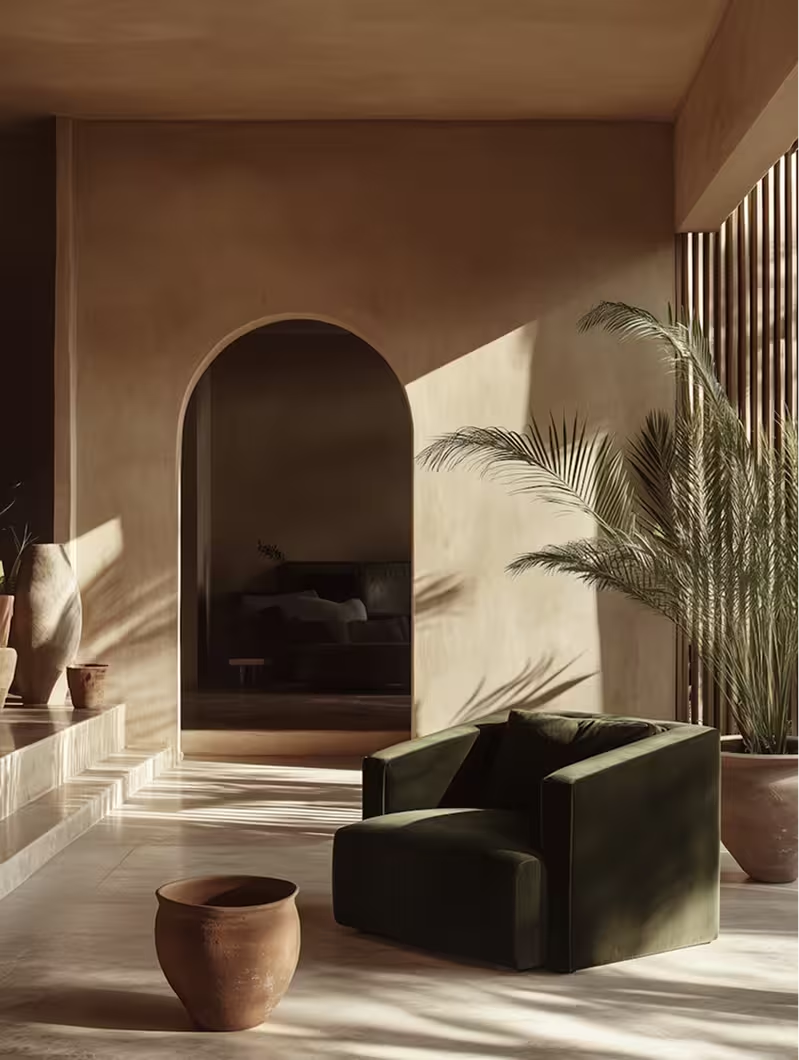
Material palettes also need to be flexible. Neutral, natural bases allow a space to evolve with new furniture, art, and technology without requiring a full redesign. Texture becomes the timeless anchor creating warmth and character without relying on trend-driven colors or patterns.
Emotional Impacts
Future-ready design should still feel deeply personal. Sometimes, sustainable or tech-forward spaces can feel too clinical but the best future design is human-centered first. It supports well-being, ease, and emotional comfort while quietly improving performance in the background.
A space that adapts reduces stress. When rooms can shift as life shifts, people feel less trapped by their layout. When storage is integrated, mental clutter decreases. When air quality is improved and light is optimized, daily life feels lighter even if you don’t consciously notice why.
Closing Thoughts
Designing for the future is a practice of responsibility to people, to resources, and to time. It’s not about packing a space with technology or chasing the newest sustainable material. It’s about creating interiors that perform well, feel good, and remain adaptable as life changes.
The most future-proof spaces are often the simplest ones: clear layouts, honest materials, good light, fresh air, and flexible systems that can evolve quietly. When those fundamentals are strong, the space stays resilient and stays beautiful no matter what the future brings.
.avif)
.avif)